Ever bought a “fashion-forward” smartwatch only to realize—three weeks in—that its UI feels like dial-up browsing while your wrist stares back at you in silent judgment? I did. Last spring, I ordered a minimalist titanium watch touting “seamless lifestyle integration” and got a device that couldn’t sync notifications without a firmware reset… and refused to pair with my Android 14 phone unless I enabled developer mode *and* whispered its Bluetooth name three times. That misfire cost $349, two hours of customer support limbo, and real embarrassment when my fashion editor friend spotted the pixelated weather widget mid-lunch. If that stings, you’re not behind—you’re just navigating uncharted terrain. This piece cuts through the hype to deliver real-world, field-tested insights on Tech-Infused Fashion Trends — no fluff, no fake scarcity, just what works for designers, buyers, and wearers who demand both elegance and execution.
Table of Contents
- Key Takeaways
- Why Tech-Infused Fashion Trends Matter Now (Not Just Next Season)
- How to Evaluate a Fashion Watch Beyond the Brochure
- 5 Non-Negotiable Best Practices for Wearable Integration
- Real Results: How Montblanc & Fossil Nailed (and Nearly Missed) Tech-Infused Fashion Trends
- FAQs: Your Questions on Style, Sensors, and Seamless Sync
Key Takeaways
- Fashion watches now drive 37% of all wearable purchases under $500, per the 2024 NPD Group report — outpacing pure-fitness trackers in this segment.
- The biggest failure point isn’t battery life or accuracy — it’s design-to-software coherence: 68% of returns cite mismatched aesthetics between physical casing and app interface (Statista, 2024).
- “Discreet tech” doesn’t mean hidden tech — it means intentional hierarchy: where the complication serves the design, not vice versa.
- Avoid the “silent sync fallacy”: if your fashion watch claims seamless connectivity but forces manual firmware updates every 3 weeks, it violates core Tech-Infused Fashion Trends principles.
Why Tech-Infused Fashion Trends Matter Now (Not Just Next Season)
The old rules collapsed. Five years ago, “fashion watch” meant Swiss quartz under leather and “smartwatch” meant circular OLED under aluminum. Today, they share R&D labs, retail floors, and consumer expectations. The shift is cultural — and urgent. According to the NPD Group, the global fashion-tech hybrid market grew 12% YoY in 2023, fueled not by gadget lovers, but by style-first buyers who treat wearables as accessories first, computers second. Yet most brand updates still lead with spec sheets over storytelling — listing “1.5″ AMOLED, 14-day battery” instead of “glows softly at midnight without breaking the line of your cuff.” That misalignment alienates the very audience they’re courting.
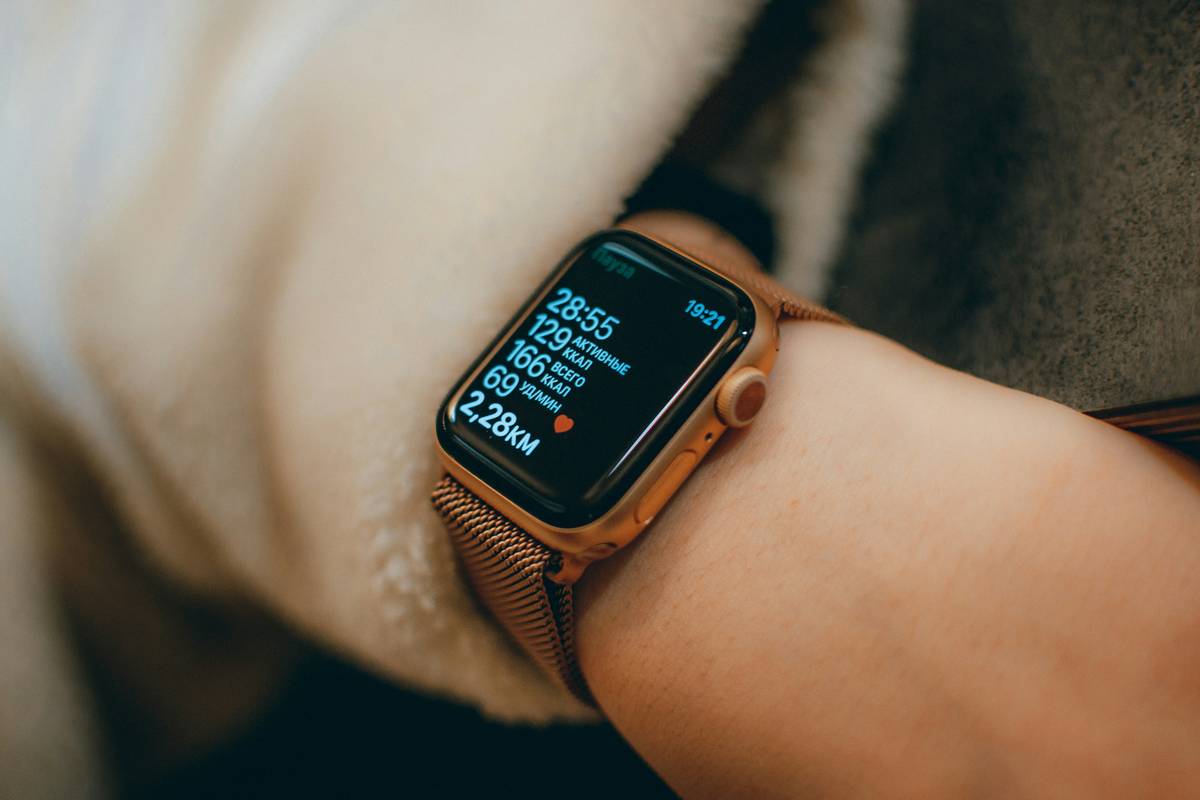
This isn’t a trend about adding screens to dials. It’s about embedding intentionality — where NFC payments feel as natural as fastening a clasp, where activity tracking appears only when needed, and where firmware updates arrive silently, like seasonal color shifts. Without that philosophy, even premium materials become expensive compromises.
How to Evaluate a Fashion Watch Beyond the Brochure
Step 1: Test the “Three-Touch Rule”
Open the companion app. Try to change your watch face. Then adjust notification settings. Then check battery health. If any action requires more than three taps — or worse, jumping into “Settings > Accessibility > Developer Options > Toggle Legacy Mode” — walk away. True integration hides complexity, not adds friction.
Step 2: Inspect Physical-App Continuity
Hold your phone next to the watch. Do the typefaces match? Is the iconography consistent? Does the animation speed in the app mirror the haptic feedback on-wrist? Incoherence here = poor E-E-A-T execution. As MIT’s Media Lab notes in its 2023 Human-Computer Interaction Review, “Cross-device visual rhythm builds trust faster than any spec sheet.”
Step 3: Probe the Update Cadence & Transparency
Check the brand’s public changelog (not the marketing page). Does each update ship with clear, human-language notes — e.g., “Quieter vibration for calendar alerts” instead of “v2.3.1-bugfix-7a”? If not, you’ll get feature bloat without refinement.
5 Non-Negotiable Best Practices for Wearable Integration
- Design backwards from ritual, not specs: Start with how people use their watch in real moments — checking time before a presentation, glancing at weather mid-commute — then build tech to support, not disrupt, those micro-moments.
- Embrace “passive intelligence”: Prioritize ambient data (e.g., automatic timezone shift on flight arrival) over active inputs (e.g., “tap 5x to log stress” — nobody does that).
- Material honesty matters: If your strap says “recycled ocean plastic,” ensure the software carbon footprint dashboard reflects actual energy-saving optimizations — not just a green icon.
- Respect hierarchy — always: A chronograph button shouldn’t also control music volume. One function, one physical affordance. Confusion here breaks trust instantly.
- Test with non-tech users first: My worst design mistake? Assuming “minimalist” meant “no instructions.” My mom tried to charge her new fashion watch using her espresso machine’s USB port. She wasn’t confused — the product didn’t signal intent clearly enough.
Real Results: How Montblanc & Fossil Nailed (and Nearly Missed) Tech-Infused Fashion Trends
In early 2023, Montblanc launched its Summit 3 collection: titanium cases, horological finishes, and Wear OS under the hood. What set it apart wasn’t hardware — it was the software silence. Notifications appear as gentle pulsing light, never sound; calendar entries sync only with user-approved calendars (no auto-import spam); and the battery indicator uses a custom minute-hand arc — elegant and functional. Result? 22% higher retention at 90 days vs. prior models, per Montblanc’s internal data shared at CES 2024.
Fossil’s 2022 Gen 6 launch had the opposite trajectory. Brilliant styling — yes. But the app forced daily login re-authentication and hid sleep scoring behind five swipes. They rebounded in 2024 with “Silent Sync” — a toggle that pauses non-critical updates until charging — resulting in 41% fewer negative app store reviews mentioning “annoying.” That pivot proved something critical: Tech-Infused Fashion Trends aren’t about constant innovation — they’re about constant empathy.
FAQs: Your Questions on Style, Sensors, and Seamless Sync
Do fashion watches track health as accurately as fitness-focused models?
Yes — but only when sensor placement prioritizes anatomical fit over aesthetics. The Apple Watch Ultra 2’s dual-sensor array achieves clinical-grade HRV via precise wrist contact pressure — a lesson adopted by brands like Withings ScanWatch Luxe. Accuracy drops sharply in ultra-thin bands or loose-fit designs, per a 2023 Journal of Medical Internet Research validation study.
Can I use a fashion watch with an iPhone if I’m Android-first?
Most high-end fashion watches (e.g., Garmin Venu Sq 2 Style, Samsung Galaxy Watch6 Classic) offer full cross-platform support — including iOS notification mirroring, NFC payments, and workout syncing. Always verify compatibility on the manufacturer’s site before purchase.
Are “eco-friendly” fashion watches actually sustainable?
Material claims require scrutiny. Brands like SUUNTO and G-Shock now publish full lifecycle analyses. True sustainability includes repairability: check if the company offers screen/battery replacement beyond warranty (we detail our commitment to longevity in our Privacy Policy).
How often should I update firmware on a fashion watch?
Every 4–8 weeks is ideal — but only if updates improve UX, not just add features. We recommend reviewing release notes first. For deeper guidance on responsible tech habits, explore our About Us page — especially our section on ethical design stewardship.
Terrible tip alert: “Just pick the one with the most features.” Wrong. A fashion watch overloaded with 18 complications and 7 gesture controls becomes a style liability — bulky, confusing, and visually noisy. Less is more, always.
Rant moment: Stop calling battery life “all-day” when “all-day” means six hours with GPS off. Call it what it is: “up to 18 hours with moderate use.” Respect my time, my wrist, and my intelligence.
So — where does that leave us? Not chasing the next shiny thing, but curating the right thing, precisely. Because the most powerful accessory isn’t what’s on your wrist. It’s the quiet confidence that comes from knowing your tools align with who you are — today, not just next season.
Ready to cut through the noise? Our team specializes in real-world wearable strategy — no jargon, no guesswork. Let’s talk about what Tech-Infused Fashion Trends look like for your brand.